
With government moving toward granting local authorities the power to enforce pavement parking restrictions, we explore what the change could mean for road safety, parking policy and how councils approach street space in the future.
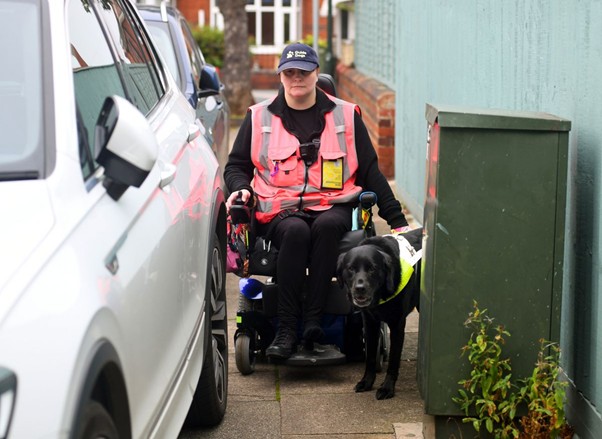
The Department for Transport has confirmed that it intends to move forward with granting local authorities in England the powers to enforce pavement parking restrictions outside London. While the detail and legislative pathway are still developing, the direction of travel is now clear. Pavement parking enforcement is likely to become a responsibility for councils rather than the police.
For many authorities, this represents a significant shift. Pavement parking has long been recognised as a problem in towns and cities across the country, but until now enforcement outside London has been extremely limited. The proposed change creates both an opportunity and a challenge for local authorities who will need to consider how they respond strategically.
Why Pavement Parking Is Rising Up the Agenda
The debate around pavement parking is often framed as a parking issue, but in practice it sits within several policy areas including road safety, accessibility, urban design and active travel.
When vehicles mount the footway, pedestrians are frequently forced to step into the carriageway to continue their journey. This creates particular difficulties for wheelchair users, visually impaired pedestrians, parents with pushchairs and older residents. In many cases, the problem is not just inconvenience but a safety risk.
There is also an increasing alignment between pavement parking reform and wider transport policy objectives. Authorities across the UK are introducing 20mph environments, School Streets, Liveable Neighbourhoods and active travel infrastructure. Pavement parking can undermine many of these initiatives by obstructing pedestrian routes and reducing the usability of footways.
As a result, the issue is now being viewed less as a minor parking inconvenience and more as a barrier to safe and inclusive streets.
Why Enforcement Alone Will Not Solve the Problem
One of the key lessons emerging from areas that already enforce pavement parking restrictions is that the issue cannot simply be addressed through civil enforcement alone.
In many locations, pavement parking has developed over decades because streets were never designed for modern vehicle sizes. Car ownership levels have increased significantly, while vehicle dimensions have grown substantially. The rise of SUVs and larger family vehicles means that the standard 2.4 metre parking bay width used in many streets is often no longer sufficient when mirrors, door opening and pedestrian clearance are considered.
This creates a difficult dilemma for local authorities. Strict enforcement could reduce available parking capacity in residential streets where space is already constrained. Conversely, allowing vehicles to continue parking partially on the footway may maintain parking supply but at the cost of pedestrian safety and accessibility.
For this reason, the introduction of enforcement powers is likely to require a broader policy response that considers:
· Street design and available carriageway width;
· Existing parking provision and demand;
· The potential displacement of vehicles;
· Local road safety risks and accessibility requirements.
Treating pavement parking as purely an enforcement issue risks creating unintended consequences unless it is considered within a wider parking and transport strategy.
The Strategic Choices Authorities May Need to Make
If the proposed changes progress as expected, authorities will effectively be presented with several possible policy approaches.
Some may consider a blanket prohibition model, similar to the London approach, where pavement parking is banned unless explicitly permitted. Others may adopt a more targeted approach, identifying specific corridors where footway parking remains necessary while prohibiting it elsewhere.
A third option may involve prioritising interventions around locations where the safety and accessibility impact is greatest, such as near schools, town centres or public transport hubs.
Each approach carries different implications for Traffic Regulation Orders, signage requirements, enforcement resourcing and public communication. Crucially, the political and community sensitivity around parking means that any changes will need to be carefully managed and supported by clear evidence.
What This Means for the Parking Sector
For parking and highways teams, the introduction of pavement parking enforcement powers could represent one of the most significant policy shifts in recent years.
Authorities will need to consider a number of questions before implementation, including:
· How widespread pavement parking currently is across their network;
· Which streets present the highest safety risk;
· Whether existing parking provision can absorb displacement;
· How enforcement would be resourced and prioritised.
This suggests that pavement parking reform is unlikely to be a single regulatory change. Instead, it will require a structured implementation programme involving policy development, technical assessment, stakeholder engagement and operational planning.
A Broader Conversation About Street Space
Ultimately, the pavement parking debate reflects a broader question about how street space should be allocated.
Over time, the growth in vehicle ownership has placed increasing pressure on residential streets. At the same time, policy priorities have shifted toward safer streets, improved accessibility and greater support for walking and cycling.
Managing pavement parking sits at the heart of this tension. Authorities will need to balance the legitimate need for parking with the equally important need to protect pedestrian space.
Done well, the reform could support safer streets, improved accessibility and more attractive environments for walking and cycling. However, achieving this will require careful planning rather than simply introducing enforcement powers.
Continuing the Conversation
Given the scale of change that may be approaching, it is important for authorities to begin thinking about the issue now.
Ethos will shortly be hosting a webinar exploring the relationship between pavement parking, road safety and parking strategy. The session will examine how authorities can approach pavement parking reform in a structured and evidence-led way, considering not only enforcement but also street design, accessibility and wider transport policy.
Please reach out if you would like to attend this webinar, scheduled for 22 April 2026, which will be managed by Landor Links.
The discussion will aim to help local authorities understand the choices available to them and how pavement parking policy can be implemented in a way that supports safer and more inclusive streets.