


The Council commissioned Ethos to develop a district-wide Active Travel Strategy to help increase levels of walking and cycling and support healthier, more sustainable travel across the district.
While there was growing recognition of the benefits of active travel, the Council required a clear strategic framework to guide investment, prioritise interventions and identify opportunities to improve connectivity between towns, villages, employment areas and key local destinations.
The district’s largely rural geography and dispersed settlements presented particular challenges for delivering attractive and practical walking and cycling routes. Existing provision was often fragmented, with gaps in the network limiting the ability for residents to make everyday journeys by active modes.
The Council therefore required a strategy that could establish a clear long-term vision, identify priority corridors and interventions, and provide a deliverable programme of projects that would support increased walking and cycling across Huntingdonshire.
%20(16).png)
The commission followed a structured, staged approach to ensure the strategy was developed from a strong evidence base and shaped by stakeholder input. At the outset of the project, our team established the strategic foundations by preparing an outline business case that defined the aims and objectives of the Active Travel Strategy.
This included identifying the need to address barriers to walking and cycling, increase modal shift for everyday journeys, and ensure that local communities were actively involved throughout the development of the strategy.
Supporting documentation included an initial risk register, an outline delivery programme and a stakeholder engagement plan, supported by stakeholder mapping to identify key partners, their roles and their potential influence on the project.
The next phase of work focused on building the evidence base to inform the strategy. This involved the collection and review of a range of data, including traffic surveys and environmental considerations, alongside comprehensive site visits to assess potential corridors and opportunities for improving walking and cycling connectivity.
Potential routes and interventions were assessed using a structured appraisal framework to identify locations where improvements could deliver the greatest benefits in terms of safety, accessibility and connectivity between settlements, employment areas, schools and local services.
Community engagement formed a central part of the project. A programme of consultation roadshows was delivered across the district at a range of venues and times of day to encourage broad participation. Engagement activities also included visits to local schools where the project team delivered road safety workshops while discussing the opportunities presented by the strategy.
Following the identification of priority routes and interventions, the final stage focused on developing the strategy and its supporting implementation framework. This included preparing a prioritised programme of actions supported by indicative cost estimates, delivery considerations and potential funding opportunities.
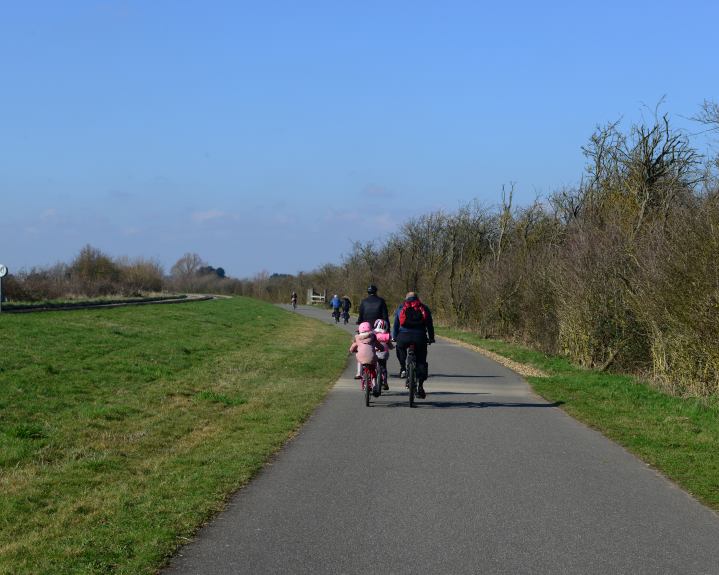

The strategy established a long-term vision supported by a series of strategic objectives and a prioritised programme of actions, enabling the Council to focus resources on projects that would deliver the greatest benefit in terms of connectivity, safety and accessibility.
Importantly, the strategy provides the Council with a strong foundation to support future funding applications for active travel infrastructure. The evidence base, stakeholder engagement outcomes and prioritised project pipeline developed through the commission position the Council to respond effectively to future regional and national funding opportunities.
By clearly identifying priority corridors and interventions, the strategy enables Huntingdonshire District Council to move forward with confidence in developing projects that encourage greater levels of walking and cycling while supporting healthier communities and more sustainable travel patterns.
